
Cookies & Privacy
This website uses cookies or similar techonoglies to enhance your browsing experience and provide personalized recommendations. By contrinuing to use our website, you agree... Cookie Policy
July 25, 2019⎯ Laurie Bonner
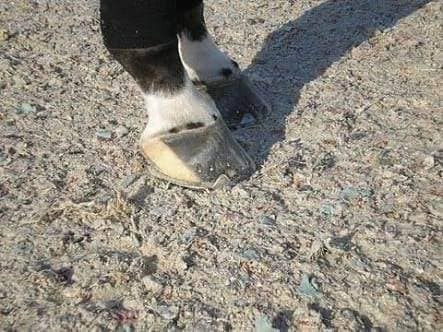
It’s far better to head off this potentially crippling hoof condition than to try to treat it. Here’s what you need to know to protect your horse.
Laminitis is probably one of the most dreaded diagnoses in the horse world. Dysfunction and/or inflammation of the tissue (laminae) that connects the coffin bone to the inside of the hoof wall, laminitis can cause excruciating pain and permanent unsoundness. In many cases, euthanasia is the most humane option.
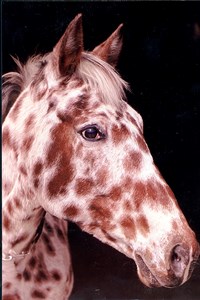
Treatment options for laminitis remain limited. Icing the feet can help to curb the inflammation in the tissues, but once the horse begins showing outward signs of pain, the damage is already underway. At that point, supportive footing—such as deep bedding or various hoof pads or shoes—and anti-inflammatory medications may help halt or slow the damage to the hooves, but they cannot reverse it.
It’s far better to stop laminitis from developing in the first place. In recent years, researchers have made great strides in identifying the factors that cause laminitis. And while not every case can be avoided, it is now possible to greatly reduce the risks that any horse will develop this disease. Here are five basic steps you can take to protect your horse from developing laminitis:
IDENTIFY AND CONTROL UNDERLYING METABOLIC DISORDERS
One surprising statistic researchers have uncovered in recent years is that about 70 percent of laminitis cases develop as a result of metabolic disorders. This form of the disease—called either pasture-associated or endocrinopathic laminitis—results from hormonal imbalances. Endocrinopathic laminitis tends to cause a low-grade chronic form of the disease that comes on slowly and causes vague soreness rather than extreme, sudden pain. Failure of the laminae and subsequent displacement of the coffin bone, if it happens at all, is slow and gradual rather than sudden and catastrophic.
The good news is that the two major metabolic disorders associated with laminitis can be diagnosed and controlled well before the horse develops any signs of serious footsoreness. Talk to your veterinarian if you are concerned your horse may be at risk for either of these conditions:
PPID is more likely to develop in horses over the age of 15 or so, but it can appear in those as young as 7. The disease can be kept under control with the drug Prascend, which contains the active ingredient pergolide.
MANAGE YOUR AT-RISK HORSE’S DIET CAREFULLY
For horses with metabolic disorders, dietary management is crucial to preventing laminitis. Even small or “normal” portions of sugars or simple starches found in grains and lush grasses can trigger an episode. If your horse is diagnosed with EMS or PPID, you may need to take these actions:
Not all hays will require soaking. The most effective way to determine the levels of NSCs in your hay is to send off a sample for analysis, both before and after soaking. Your veterinarian or a veterinary nutritionist can make specific soaking and feeding recommendations for you based on laboratory results, but generally the goal is to limit NSC levels to 10 to 12 percent for horses with endocrine disorders.
If you do soak your hay, always feed the wet portion immediately, before mold can grow. Also, avoid soaking your hay for longer than the suggested time frame. Prolonged soaking may remove too many water-soluble vitamins, minerals and other nutrients your horse needs to thrive.
Some horses may need to wear grazing muzzles or be kept off of pasture only at certain times of the year. Others might need to have their grazing restricted throughout the season. For those who are especially vulnerable to laminitis, the only safe form of turnout may be in a dry lot year-round (although efforts need to be made to provide them with exercise).
AVOID DIETARY EXTREMES
Even a normal horse is vulnerable to laminitis under certain conditions. Another well-documented form of laminitis is associated with systemic inflammation, caused when bacteria and/or their toxins get into the bloodstream and spread throughout the horse’s body. This form of laminitis is often acute, sudden and excruciatingly painful; separation and displacement of the coffin bone is common and usually catastrophic.
Systemic inflammation can develop after a localized infection in any organ, but it often begins in the intestine after acute digestive distress. The best known triggers for gastrointestinal laminitis can be avoided:
Horses who require large amounts of concentrates must be fed carefully. One option is to break up the large meals into smaller portions fed throughout the day, so the horse never needs to digest too much at once. Feeding hay first may also slow down the horse’s consumption of grain and help to keep the starches in his stomach longer. Alternatively, if your horse needs a high-energy feed, look for one that provides more calories from fat than from starches.
To prevent this, introduce any changes to the horse’s feed gradually. If switching to a new type of concentrate, for example, substitute only a small amount for the horse’s old feed at first, then gradually increase the proportion of the new feed with each subsequent meal over the course of at least a week.
WATCH FOR LAMINITIS WHEN TREATING OTHER ILLNESSES
Systemic inflammation that leads to acute laminitis can originate in other organs as well as the intestines. More common examples include a mare who retains placental membranes in her uterus after giving birth or a horse with severe pleuropneumonia, an infection in the lungs. But just about any internal organ can be the source of the infection. Severe gastrointestinal illnesses, such as Potomac horse fever or enteritis, can also lead to laminitis.
Any horse who is this gravely ill will already be under a veterinarian’s care, and if you’re caring for him at home, she will likely coach you on how to watch for the earliest hints of laminitis. For example, she’ll show you how to check your horse’s digital pulse on the back of the fetlock and feel for heat in the hoof wall. A “bounding” pulse is a sign of pain and inflammation in the foot.
Icing the horse’s feet as a preventive measure may be advisable. Buckets of ice water are the old standby, but you’ll also find a number of boots and other products designed to keep a horse’s hooves cold. Keep the cold therapy going continuously until a veterinarian can see the horse and guide further treatment.
KEEP UP THE BASIC HOOF CARE
Unusual physical stresses on a horse’s hooves can strain the laminae and cause separation from the hoof wall even in the absence of inflammation or hormonal causes of the disease. These forms of laminitis are relatively rare and can’t always be prevented. But if your horse is at risk in any of these scenarios, you can take steps to reduce the chances of serious trouble:
Source: EQUUS
This website uses cookies or similar techonoglies to enhance your browsing experience and provide personalized recommendations. By contrinuing to use our website, you agree... Cookie Policy