


Cookies & Privacy
This website uses cookies or similar techonoglies to enhance your browsing experience and provide personalized recommendations. By contrinuing to use our website, you agree... Cookie Policy
Learn how to help your horse remain free of this common and highly contagious respiratory disease.
Horses are traveling more than ever before, and whether they’re heading down the road or across the country, factors associated with transportation can leave your horse at risk for disease threats. One of the most common equine diseases—as well as one of the most contagious—is strangles.
Strangles, caused by the bacteria Streptococcus equi, is a highly contagious upper respiratory disease most common in young horses. It also has several potentially fatal complications and the capability to cause persistent infections in populations of asymptomatic carrier horses.
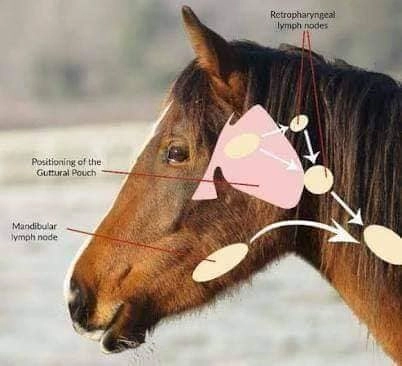
Clinical signs of strangles can include fever, nasal discharge, difficulty swallowing, abnormal breathing, and swelling and/or abscesses of the lymph nodes.
“Commonly, a horse with strangles will have profuse nasal discharge and swollen submandibular lymph nodes,” said Kevin Hankins, DVM, MBA, senior equine technical services veterinarian for Zoetis. “With strangles, about 10% of horses don’t fully recover from the disease and can then become persistent carriers. Unfortunately, persistent carrier horses don’t show the outward clinical signs that sick horses do.”
Due to the lack of outward signs in carrier horses, strangles can spread quickly and easily through a barn or herd because of its ability to be transmitted through direct animal-to-animal contact or by objects such as bridles, buckets, or human hands.
Biosecurity protocols such as observation and screening of newly arriving horses help to prevent the spread of disease. Vaccination is another way to combat strangles.
Because strangles is classified as a risk-based disease, Hankins recommends discussing vaccination with your veterinarian if:
If your horse meets any of these risk criteria, speak with your veterinarian about your horse’s disease risk and the benefits of vaccination.
Source: THE HORSE.
This website uses cookies or similar techonoglies to enhance your browsing experience and provide personalized recommendations. By contrinuing to use our website, you agree... Cookie Policy